
Neurodiversity in the Workplace: How VR Can Support Inclusive Learning and Training
WELCOME TO A WHOLE NEW WORLD OF POSSIBILITY!!!! Neurodiversity in the workplace is not a niche conversation. It is a practical, people-centered, performance-centered issue that matters across hiring, training, communication, and retention. Today we’re focusing on a topic that matters big time: NEURODIVERSITY! 💜💜💜
When we talk about neurodiversity, we’re talking about the very real, very important variety in how people think, process, communicate, and learn. Autism, ADHD, Dyslexia, and other neurotypes are not problems to erase. They’re differences to understand and support. The problem is that a lot of traditional workplace training still expects everyone to learn the exact same way, in the exact same environment, at the exact same pace. And honestly? That just doesn’t work.
Research increasingly suggests that immersive technology can help close that gap. Used thoughtfully, virtual reality training can create more structured, repeatable, and adjustable learning environments for neurodivergent employees. Instead of forcing people to adapt to chaotic settings, VR can reduce distractions, improve clarity, support pacing, and create safer spaces for practice. That does not make VR a cure-all, but it does make it a promising inclusive tool when paired with strong instructional design and accessibility principles.
START WITH THE RESEARCH! START WITH THE RESEARCH! START WITH THE RESEARCH!
WHY VR IS GETTING ATTENTION IN NEURODIVERSITY RESEARCH!!!!
Imagine stepping into a learning environment that actually matches how YOU learn best. That’s one reason researchers and workplace learning teams are paying closer attention to VR. For neurodivergent learners who may benefit from extra structure, repeated practice, lower sensory load, and clear step-by-step support, immersive environments can offer advantages that conventional training often misses.
Studies on immersive learning suggest that VR can support attention, engagement, and rehearsal by making tasks more concrete and interactive. In a headset, distractions can be reduced, instructions can be sequenced visually, and learners can move through tasks at a pace that feels manageable. When designed well, VR becomes a CONTROLLED ENVIRONMENT for practice, feedback, repetition, and confidence-building. That is one reason it continues to show up in discussions about inclusive training and workplace readiness.
REDUCING COGNITIVE LOAD WITH VR!
One of the biggest hurdles for many neurodivergent learners is "cognitive load." This is just a fancy way of saying "information overload." When there’s too much going on at once, the brain can get stuck.
That’s one reason VR keeps showing up in educational and workplace research. Immersive environments can be designed to reduce unnecessary inputs and present information in a more structured way. Common features include:
STEP-BY-STEP GUIDANCE: Complex tasks can be broken into manageable pieces.
VISUAL PROMPTS: Learners can receive clear cues about what to do next.
REPEATABLE PRACTICE: Tasks can be rehearsed multiple times without social pressure.
CONTROLLED FEEDBACK: Guidance can be delivered consistently and at the right moment.
Systematic reviews in immersive learning have found that these design choices can support engagement and reduce overload for some learners, especially when tasks are hands-on and procedural. The key point is not that VR is automatically better. The key point is that structure, predictability, and learner control matter, and VR can deliver those conditions very effectively when used well.
SENSORY CONTROL: A PRACTICAL ADVANTAGE OF VR
For some autistic employees and others with sensory processing differences, a "normal" office or classroom can feel like a sensory assault. Bright flickering lights, loud printers, overlapping conversations, and constant interruptions can make learning harder than it needs to be.
This is where VR has a practical advantage. Within an immersive experience, designers can:
Adjust Light Levels: Keep the environment visually calmer.
Control Audio: Limit background noise and highlight task-relevant sounds.
Remove Distractions: Narrow attention to the task at hand.
Support PACING: Let learners pause, repeat, or slow down when needed.
This level of customization matters because performance is not just about ability. It is also about environment. Research on autism and workplace inclusion consistently shows that when sensory and communication barriers are reduced, people are better able to demonstrate what they know and do well.

BUILDING SOCIAL CONFIDENCE WITHOUT THE STRESS!
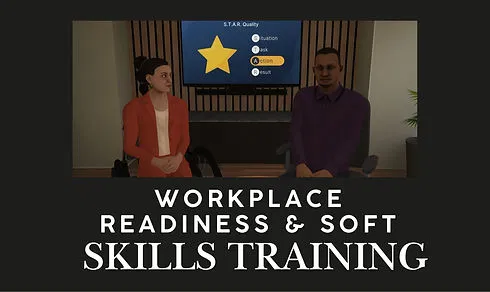
Social situations can be one of the biggest pressure points for neurodiverse employees in work and team settings. That’s where virtual reality training can make a real difference. VR gives learners a place to practice social scenarios without the noise, unpredictability, or pressure of jumping straight into the real thing. Through immersive role-playing, employees can practice:
Navigating team meetings
Handling customer feedback
Collaborating on projects
And there’s real data behind this kind of approach. In one 5-week adaptive VR-based program for autistic young adults, average social functioning scores on the SRS-2 improved by 12.3 points, showing meaningful gains in social responsiveness over a relatively short period. That matters because progress in social confidence usually takes time, and structured, repeatable practice can help make that progress feel more achievable.
It’s basically like a flight simulator for social skills. Learners can rehearse conversations, read social cues, practice responses, and build confidence inside a controlled VR environment before using those skills in everyday life. As a general workplace strategy, that makes VR especially promising for onboarding, communication practice, and role-specific interpersonal training.
REAL SKILLS FOR THE REAL WORLD!!!!
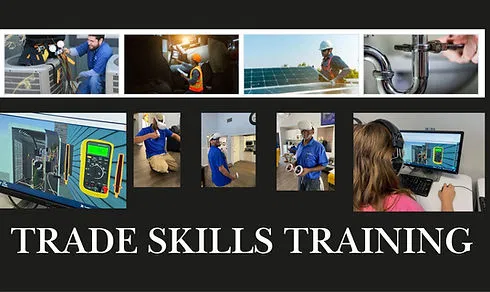
We aren't just talking about theory here; we are talking about REAL APPLICATIONS! Across workforce development research, VR has been used for job-task rehearsal, safety simulations, communication training, and procedural learning.
This matters because many workplace skills are easier to learn by doing than by reading or watching alone. Immersive practice can make abstract instructions more concrete and can help learners connect information to action. For neurodivergent employees in particular, that combination of hands-on practice, repetition, and environmental control may be especially helpful depending on the task and the design of the experience.
THE "DOUBLE EMPATHY" IDEA
Here’s one of the most important ideas in neurodiversity conversations: the double empathy problem. This idea says that communication breakdowns between neurodivergent and neurotypical people are not just caused by one side "missing" something. The gap goes both ways. Different people experience, interpret, and express the world differently, so misunderstandings can happen on both sides.
That’s where VR can be especially useful. Neurodivergent employees can practice communication and workplace scenarios in a setting that feels calmer and more predictable. At the same time, managers, teammates, and facilitators can use immersive experiences to better understand sensory overload, processing differences, and alternative communication styles.
When organizations build empathy both ways, teams get stronger. Differences stop looking like failures and start looking like perspective gaps that can be understood, practiced, and bridged. That is one of the biggest reasons virtual reality training is so promising in neurodiversity work. It does not just teach tasks. It can also support understanding.
THE BOTTOM LINE: INCLUSION IS GOOD BUSINESS!
Did you know that overlooking neurodiversity inclusion has major economic consequences through underemployment, lost productivity, and preventable barriers? When organizations don't accommodate different learners, they lose out on real talent, real skills, and real innovation.
The big takeaway is simple: better support creates better outcomes. When employees get access to structured environments, clearer feedback, and more personalized virtual reality training, they may be more likely to stay engaged, practice consistently, and carry those skills into the real world. That’s good for people, and it’s good for business.
The research-backed takeaway is not that every organization needs VR for everything. It is that inclusive design matters, and VR can be a powerful tool for simulation, communication practice, sensory control, and rehearsal when applied to the right use cases.

FINAL TAKEAWAY!!!!
The future of workplace learning should be more flexible, more evidence-informed, and more inclusive. Neurodiversity-affirming practice starts with recognizing that people do not all learn, communicate, or regulate in the same way, and that good training should reflect that reality.
VR is not a magic solution, but current research suggests it can be a valuable inclusive tool. When it is thoughtfully designed, it can support sensory control, reduce cognitive overload, strengthen social rehearsal, and create safer spaces for practice. That makes it worth serious attention from learning leaders, HR teams, educators, and organizations that want training to work for more people.
KEEP LEARNING, KEEP IMPROVING, AND KEEP BUILDING WORKPLACES WHERE MORE PEOPLE CAN SUCCEED!!!! 💜
EVERYONE BELONGS! EVERYONE SUCCEEDS! EVERYONE SHINES!
Comments