
Virtual Reality Team Building on Wednesday, May 13: Accessibility, Confidence, and Connection
EVERYONE DESERVES FULL ACCESS TO LEARNING AND WORK!!!! On Wednesday, May 13, we’re spotlighting a bigger conversation around VR and physical accessibility: how immersive technology can help create more inclusive educational and professional environments for people with physical disabilities. 💜 Too many classrooms, trainings, and workplace activities still assume everyone can move, travel, stand, or interact in the same way. When that happens, talented people can be left on the sidelines instead of being supported as full participants.
That is exactly why virtual reality has become such an important area of research and practice!!!! VR can reduce some of the physical barriers that show up in traditional environments by creating shared digital spaces where people can collaborate, learn, practice skills, and contribute in ways that better fit their needs. Instead of asking, "Can everyone keep up physically?" we get to ask the better question: "How can environments be designed so more people can fully participate?" 💜
WHY PHYSICAL ACCESSIBILITY MATTERS IN EDUCATION AND WORK
When someone is excluded because of a physical barrier, the effects go beyond one missed activity. You lose participation, confidence, independence, and opportunities for growth. In education, that can mean reduced access to labs, simulations, field experiences, or collaborative exercises. In professional settings, it can mean fewer opportunities for training, onboarding, skill development, or team participation.
That is where VR accessibility design really shines! In VR, experiences can be adapted so physical limitations do not automatically become participation limits. Seated modes, guided movement, simplified controls, voice input, hand-tracking alternatives, teleportation, and customizable navigation can make it possible for more people to join in meaningful ways. Instead of being defined by mobility, stamina, or discomfort, learners and employees can focus more on problem-solving, communication, and skill-building.

VR: A TOOL FOR LEVELING THE PLAYING FIELD
VR is not a magic fix, but it can be a powerful equalizing tool when accessibility is considered from the beginning!!!! 💜 Research and applied practice both suggest that immersive environments can expand access to activities that may otherwise be difficult, costly, or physically restrictive in the real world.
That can include virtual labs, job simulations, collaborative training scenarios, orientation experiences, design reviews, and soft-skills practice. A person using a wheelchair, managing chronic pain, recovering from injury, or dealing with fatigue may be able to participate more comfortably when an experience supports seated use, lower-impact interaction, and flexible pacing.
This is one of the biggest reasons virtual reality continues to gain attention in accessibility conversations. In education, it can help students participate in simulations and experiential learning opportunities that might otherwise be limited by the physical environment. In professional settings, it can support more inclusive training, upskilling, and collaboration by shifting the focus from physical intensity to communication, strategy, and engagement.
SOCIAL SELF-EFFICACY: WHY CONFIDENCE MATTERS TOO
Physical accessibility is a huge part of inclusion, but it is not the only part. People also need to feel socially confident enough to participate, speak up, problem-solve, and connect with others. That is where social self-efficacy comes in. In simple terms, it is the belief that you can successfully handle social and work-related interactions.
Research backs up the value of VR here too. A 2024 mixed-methods study on WorkplaceVR found that VR simulations significantly increased perceived self-efficacy in social and work-related interactions, with results reaching statistical significance at P = .02. That matters because confidence changes how people show up. When people feel more prepared to communicate, respond, and engage, they are more likely to participate and more likely to benefit from the experience.
In both educational and professional settings, that makes VR more than just impressive tech. It can become a lower-pressure space to practice collaboration, navigate shared challenges, and build comfort with new tasks or group interactions. For people with physical disabilities, that confidence boost can matter just as much as the accessibility features themselves.
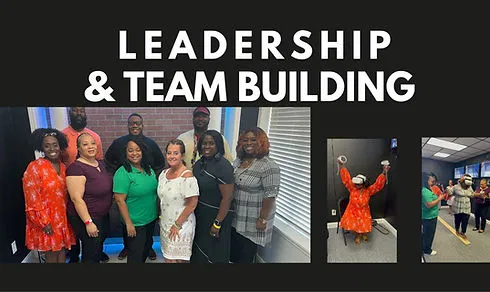
CREATING A SAFE AND SUPPORTIVE ENVIRONMENT
One of the best things about VR is that it can give people a safer place to engage without some of the same real-world physical barriers and risks. No uneven terrain. No pressure to push through pain. No assumption that participation has to look one specific way. 💜
Instead, people can focus on what actually supports inclusion: ACCESS, COMMUNICATION, and PROBLEM-SOLVING!!!! When the environment is designed well, people spend less energy worrying about whether they can physically keep up and more energy learning, contributing ideas, practicing skills, and staying engaged in the experience.
That is a big part of what makes VR for physical accessibility so promising. It creates room for more people to participate more fully and helps educators, trainers, and employers focus on strengths, creativity, and collaboration rather than physical limitations alone.
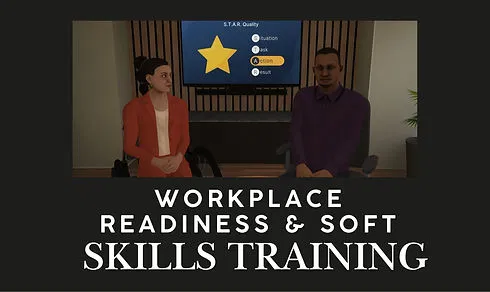
PRACTICAL TAKEAWAYS FOR MORE INCLUSIVE VR
Are you thinking about how to make VR more accessible in your school, training program, or workplace? Start with design choices that support flexibility from the beginning!!!! 💜
Here are a few strong best practices:
Offer seated and standing modes.
Include teleportation or low-movement navigation.
Reduce unnecessary physical strain in controllers and gestures.
Give users time to learn the environment at their own pace.
Build in multiple ways to interact, respond, and complete tasks.
Test experiences with disabled users instead of assuming what works.

THE FUTURE IS INCLUSIVE!!!!
The future of education and work should not depend on who can physically do the most. It should be about making sure every person has a way to participate, contribute, and grow. That is why researchers, educators, and workplace leaders are paying closer attention to VR for physical disabilities and the role it can play in creating more inclusive environments. 💜
When we remove physical barriers and support social self-efficacy, we give people more than a novel experience. We give them more equitable access to learning, training, and collaboration.
LET’S GO!!!! LET’S GO!!!! LET’S GO!!!!
Physical barriers do not have to define who gets to participate. With thoughtful design, accessible technology, and evidence-based implementation, virtual reality can help level the playing field in both classrooms and workplaces.
BE BOLD! BE INCLUSIVE! BE IMMERSED! 💜💜💜
Comments